
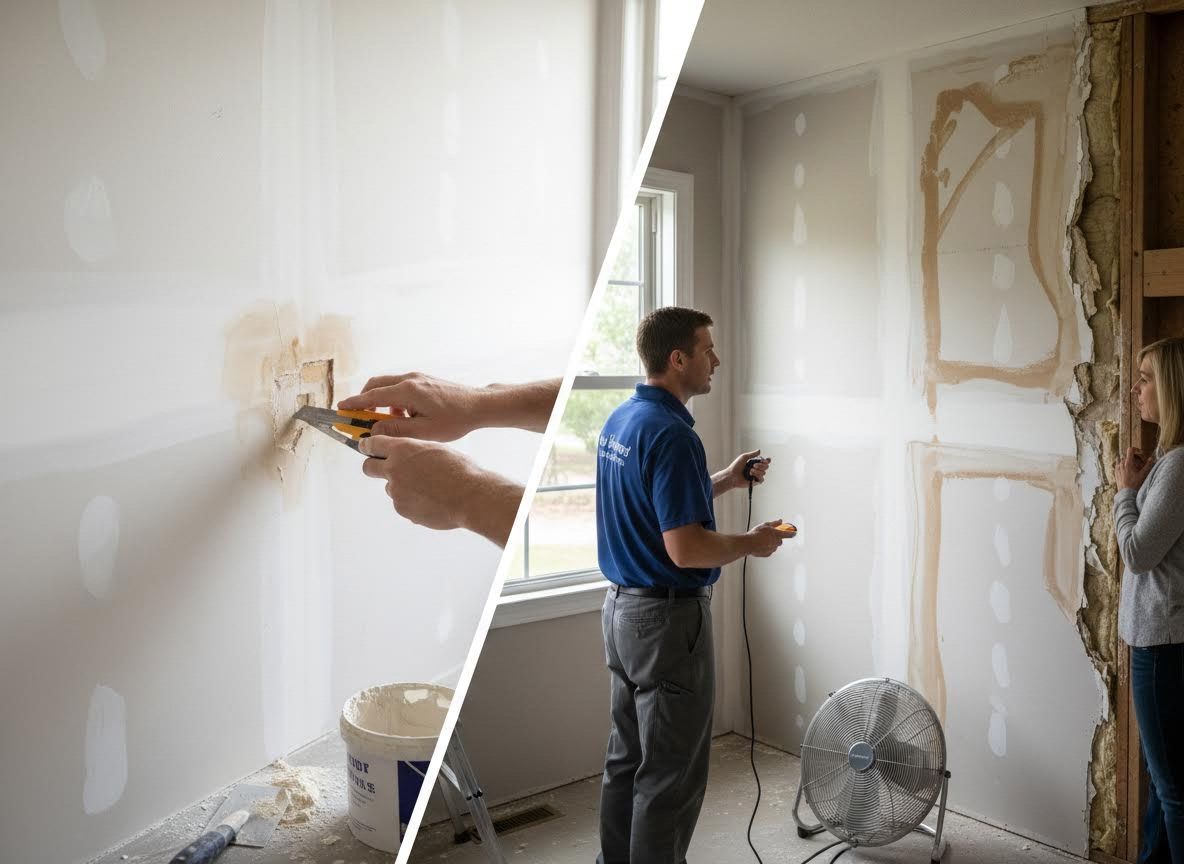
Discovering water damage on your drywall can be a homeowner's worst nightmare, prompting the urgent question: can I fix this myself, or do I need professional help? Deciding between a quick patch and a full replacement is crucial for the safety and aesthetics of your home. At New and Improved Home Services, we understand these concerns and are here to guide you through the best course of action. This decision impacts not only your walls but also the underlying structure and your family's well-being. Let's explore when a DIY approach is appropriate and when it's time to call in the experts.
Understanding the True Impact of Water Damage
Water damage to drywall is often more than just an unsightly stain; it can quickly compromise your home's indoor air quality and structural integrity. Even seemingly minor water exposure, if not addressed promptly and properly, can lead to serious issues. Drywall, being made primarily of gypsum plaster pressed between sheets of paper, absorbs water readily, losing its structural strength and becoming soft, crumbly, and susceptible to collapsing. Beyond the visible damage, moisture trapped within walls creates a perfect breeding ground for mold and mildew. This growth can spread rapidly, often hidden behind the surface, and can pose significant health risks, especially for those with allergies or respiratory sensitivities. Ignoring these issues can lead to more extensive and costly repairs down the line, affecting not only the drywall but potentially wooden studs, insulation, and even electrical wiring, highlighting the immediate need for a thorough and accurate assessment.
When a DIY Patch Might Suffice
For very small, superficial areas of water damage, where the source of moisture has been completely resolved and the drywall has thoroughly dried, a DIY patch might be a viable option. This typically applies to minor aesthetic imperfections, like a small discolored spot from a contained spill or a very brief leak that hasn't compromised the wall's firmness or structural integrity. Before attempting any patch, it's absolutely crucial to ensure the area is completely dry, free of any mold growth, and solid to the touch. If the drywall feels soft, spongy, or crumbles when pressed, a simple patch won't be enough. Small patches involve carefully cutting out the damaged section, ensuring clean edges, installing a new piece of drywall, taping the seams, applying joint compound (mudding), sanding until smooth, and then priming and painting. This method is only recommended for those who are comfortable with these precise steps, have the necessary tools, and are entirely confident the damage is purely cosmetic and completely contained to a very small area without any hidden issues.
Identifying When Professional Intervention Is Essential
There are several critical indicators that professional help is not just recommended, but absolutely necessary to protect your home and health. If the water damage covers a large area, spans across multiple studs, or if the drywall feels soft, spongy, or sags, it indicates significant structural compromise. Any visible sign of mold, or even a persistent musty odor, strongly suggests hidden mold growth that requires specialized remediation to ensure it's completely removed and won't return. Furthermore, if the water source was a major event like a burst pipe, a leaking roof, flooding, or any issue that could have affected the underlying studs, insulation, or electrical components, a professional assessment is vital. Professionals possess the expertise to accurately identify the full extent of the damage, including issues unseen behind the walls, and to address potential structural weaknesses or electrical hazards. Attempting to simply patch over these deeper, more complex issues will only provide a temporary, ineffective solution that can lead to recurring problems, escalating costs, and potential dangers down the line.
The Professional Advantage: Seamless Finishes and Lasting Solutions
Hiring a professional for water-damaged drywall replacement brings numerous benefits that DIY efforts often can't match, ensuring a safe, durable, and aesthetically pleasing repair. Experts have the knowledge, specialized tools, and extensive experience to accurately assess the full extent of the damage, identify and remediate any hidden mold or moisture, and ensure the new drywall is installed correctly. This includes precise cutting and fitting of new sheets, secure fastening to studs, and, crucially for any homeowner, a seamless mudding and sanding process. Achieving a perfectly smooth and invisible repair, especially when texture matching is involved, is an art form that professionals master. Any imperfections in the finish will be magnified once paint is applied, leaving an unsightly mark. Furthermore, professionals understand proper drying techniques and moisture prevention, which are critical to preventing future issues. By choosing a professional, you gain peace of mind knowing the job is done right the first time, providing a durable, safe, and beautifully finished surface ready for its final coat of paint, restoring your home's integrity and aesthetic appeal for years to come.
Conclusion
Making the right decision about water-damaged drywall is paramount for both your home's integrity and your peace of mind. While small, superficial issues might be manageable with careful DIY, larger or more complex problems demand the expertise of seasoned professionals to ensure safety, prevent future issues, and achieve a flawless finish. For dependable, family-owned service that prioritizes your home's longevity and beauty, New and Improved Home Services is always ready to assist with professional and affordable solutions. We invite you to contact us today to discuss your specific needs and receive an expert assessment.